Senior thesis project at Hampshire College, in fulfillment of the requirements for the 5 College Architecture Studies Certificate and Bachelor’s Degree in Art and Architecture.
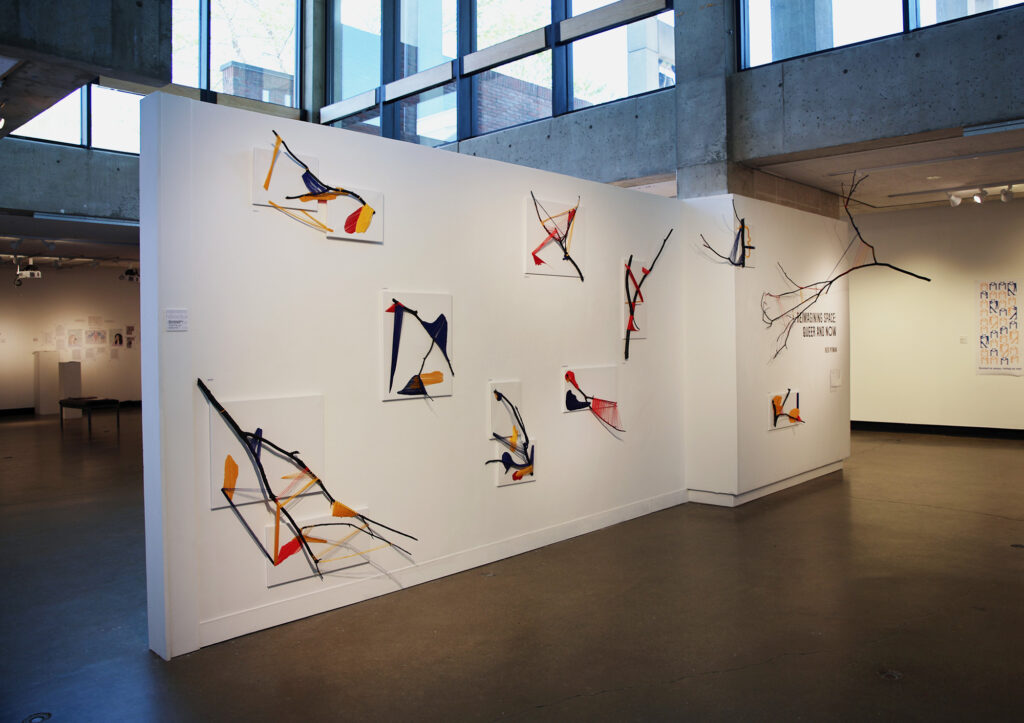
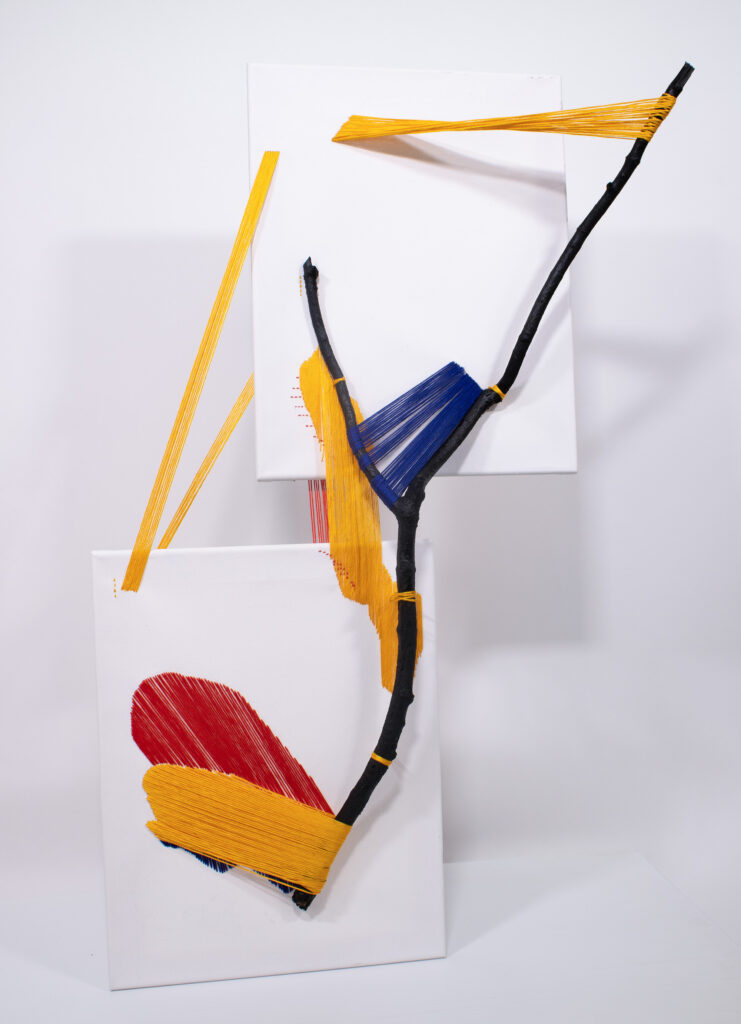
‘Radical Transformation Demands Radical Imagination’
There is a heteropatriarchal matrix on traditional Western architecture and design that inflicts restrictive norms and expectations on communities (Vallerand). The traditional practice of designing space through the top-down construction of lines and boundaries is inherently exclusive and decenters the dynamic ephemeral connections that characterize community. It creates an “illusion of homogenized public” by filtering out “the social heterogeneity of the crowd, [and] substituting in its place a flawless fabric of white middle class work, play, and consumption” (Crilley, 1993). This strips away individuality of people and space. With the understanding of space as a vital agent for sociopolitical change and transformation, we must unlearn, challenge, and reimagine representations of space to assist radical transformation.
With the rise of industrialism, efficiency in construction introduced the ability to mass-produce with newfound consistency. However, this mass production, defining the era of modernism, erased individuality from craft. There was a rigidity in space, a one-size-fits-all expectation, that neglected social, experiential human-centered, and physical accessibility issues. Those who fall out of the projected “norm” are left to figure out how to inhabit spaces not built with their lifestyles, needs, and experiences in mind. It restricts the human and emotional presence in architecture. It projects social expectations based in white supremacy and heteronormativity that restrict how different groups of people show up in and take up space. For example, the way a man traverses a wide open lobby is different from that of a woman, is different from that of a genderqueer person. However, the intended circulation in that lobby – and other public “performance” spaces – is designed with the experience of white cismen at the forefront.
Building off of queer architectural theory, this project rejects modernist notions of perfected, detached functionality and instead explores how community defies and defines space. Based on my research, I approach queer as a theory, an action and an identity. I combine theories of phenomenology and queer architectural theory to consider the physical experience of buildings as well as the non-linearity of interactions. The action of ‘queering’ is associated with subverting norms – an active un-learning and re-creating of expectations (Jobst). While the materiality of the buildings and cities we construct as architects guide and inform interpersonal relations, it also restrains the fluidity and instincts of human nature. Safe haven spaces that fall outside of traditional bounds are constantly shifting, introducing an element of ephemerality. Our ability and creativity to adapt and reuse space is important to understanding space as a personal, abstract, boundless experience (Bachelard, Massey, Vallerand).
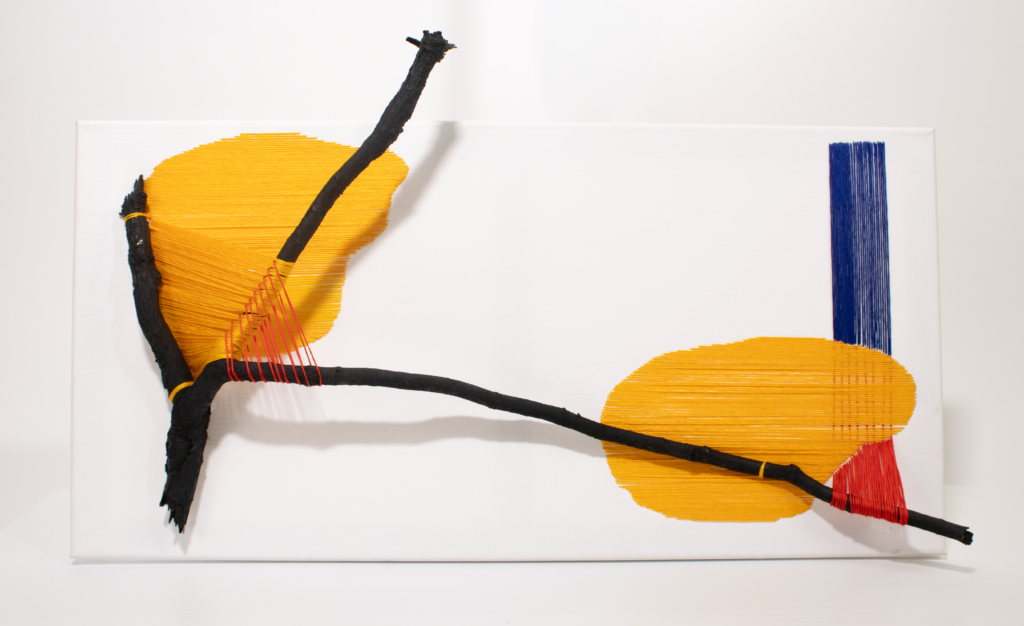
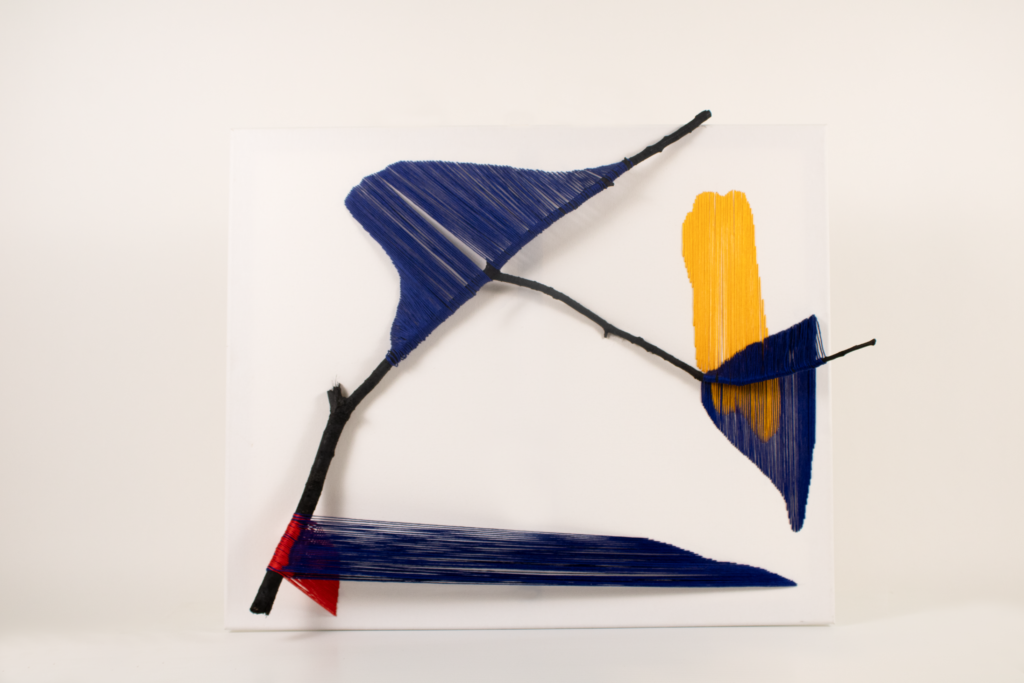
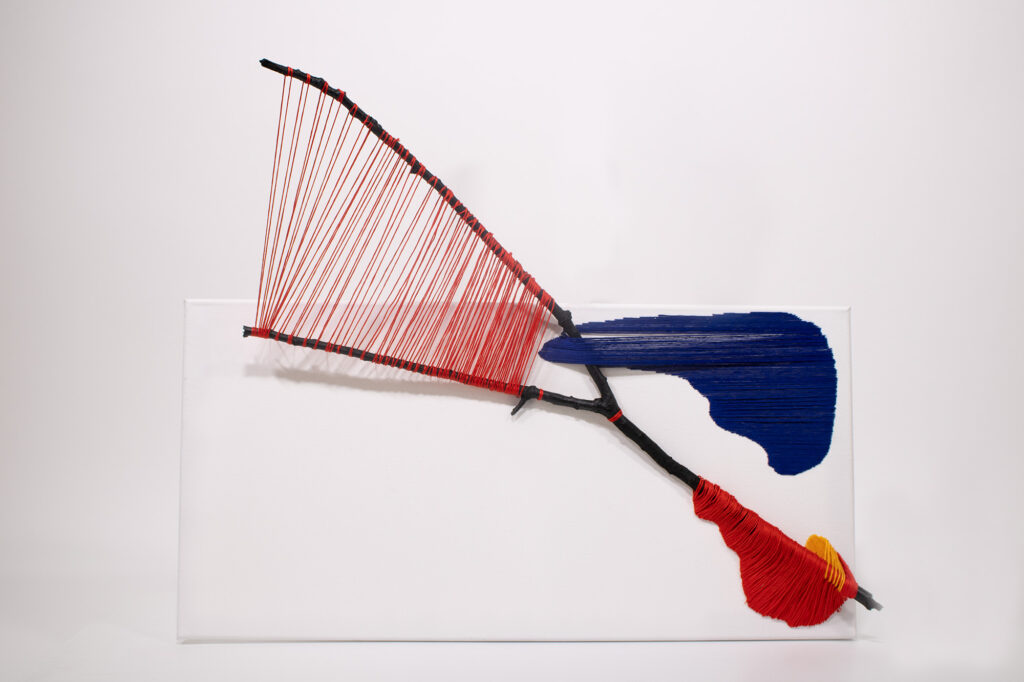
The abstract nature of experience of space presents a challenge of capturing these layered networks of interpersonal relationships and the movement of people. My work here was driven by curiosity about what architecture could be and investigating different methods that hold potential to open up new ways of thinking about space. I seek to pull away the fabric of social heterogeneity (Crilley). My project began in material explorations inspired and informed by artists like Piet Mondrian, Gordon Matta-Clark, Mark Bradford, Julie Mehretu, and Elana Herzog. The rise and popularity of works such as Mondrian’s solidified an aesthetic in the architectural world: the line and the grid as a form of representation for structure, order, containment, and control; which then became formalized through that language in architecture and the public domain. I sought to deconstruct these formal architectural languages. I investigated imposing lines and boundaries, controlling and restricting forms, and studying restrictions on human and environmental nature, observing elements of decay under the infliction of binding.
Ultimately, my methodology became an exercise in dimensionality and layering. The sticks and thread transcend the formality of the canvas, pushing and pulling as I explore the tension in resistance and disruption. Once a formal architectural fixture, in this work the black line is organic – grown and changing – as a reimagining of traditional architectural gestures now allowing for the emergence of a new language and conceptualization of space. The ritualistic process of sewing/weaving engages with space-making as repeated actions and interactions. As time passes, the sun contributes to the work, introducing new fleeting forms that mimic the temporality of the human landscape.
Bibliography / Further Literature
Ahmed, Sara. Queer Phenomenology: Orientations, Objects, Others. Duke University Press, 2006.
Bachelard, Gaston, and Maria Jolas. The Poetics of Space: The Classic Look at How We Experience Intimate Places. Beacon Press, 1994.
Berger, John. Ways of Seeing. Penguin Books, 1973.
Bingham-Hall, John. “Adaptation without Queer Ecology?: Straightened Green Infrastructures and the Destruction of Environment-Worlds.” [I2]: Investigación e Innovación En Arquitectura y Territorio, vol. 13, no. 2, July 2025, pp. 75–92. EBSCOhost, https://doi-org.proxy2.hampshire.edu/10.14198/i2.29023.
Blume, Libby Balter, and Rosemary Weatherston. “Queering the Campus Gender Landscape Through Visual Arts Praxis.” Mapping Queer Space(s) of Praxis and Pedagogy, Palgrave Macmillan Cham, 2018.
Crilley, Darrell. “Megastructures and urban change: aesthetics, ideology and design.” The restless urban landscape (1993): 127-164.
Goldstein, Katie. “Queer Homes in a Non-Queer World.” Mapping Queer Space(s) of Praxis and Pedagogy, Palgrave Macmillan Cham, 2018.
Jobst, Marko. “Queering Architectural History: Anomalous Histories and Historiographies of the Baroque.” Queering Architecture: Methods, Practices, Spaces, Pedagogies, Bloomsbury Publishing, 2023.
Massey, Doreen. “Spatial Disruptions.” The Eight Technologies of Otherness, Routledge, 1997.
Rattenbury, Kester. This Is Not Architecture: Media Constructions. Taylor & Francis, 2005.
Reed, Christopher. “Imminent Domain: Queer Space in the Built Environment.” Art Journal, vol. 55, no. 4, 1996, pp. 64–70. JSTOR, https://doi.org/10.2307/777657. Accessed 26 Oct. 2025.
Vallerand, Olivier. “On the Uses of Queer Space Thinking.” Queering Architecture: Methods, Practices, Spaces, Pedagogies, Bloomsbury Publishing, 2023.